The check-engine light is one pixel of information. DrivePulse is the whole sentence. A pocket dashboard that pairs with the $10 Bluetooth OBD adapter you may already own, streams live engine data across up to eight screens — and the instant your ECU flags a fault, it reads the code and tells you what it means, in plain English.
The moment it earns its place
DrivePulse polls your ECU in the background. The moment the check-engine light is commanded on, it automatically pulls the trouble codes — no phone, no laptop, no shop visit to find out it was a loose gas cap.

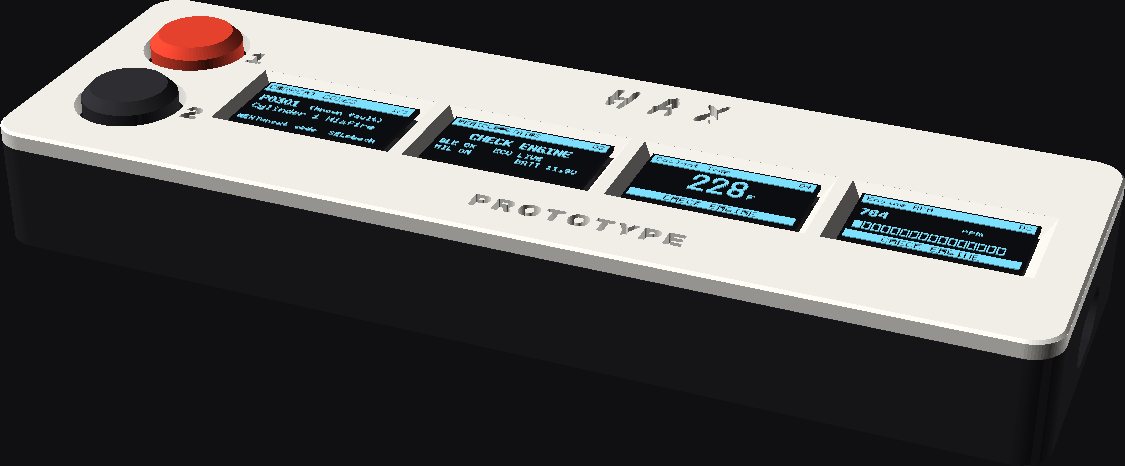
350+ built-in descriptions (P/B/C/U), legacy VW/Audi decimal codes, and smart fallback decoding for anything it hasn't seen. P0301 shows up as “Cylinder 1 Misfire”, not homework.
Reads all three code classes, plus the freeze-frame snapshot of what the engine was doing when the fault hit.
One screen tells you if your emissions readiness monitors are complete before you drive to the inspection — and warns you that erasing codes restarts them.
Clearing codes is deliberate: a confirmation screen spells out exactly what will happen. Standard OBD-II commands only — it never reprograms your ECU.
Every drive, not just bad days
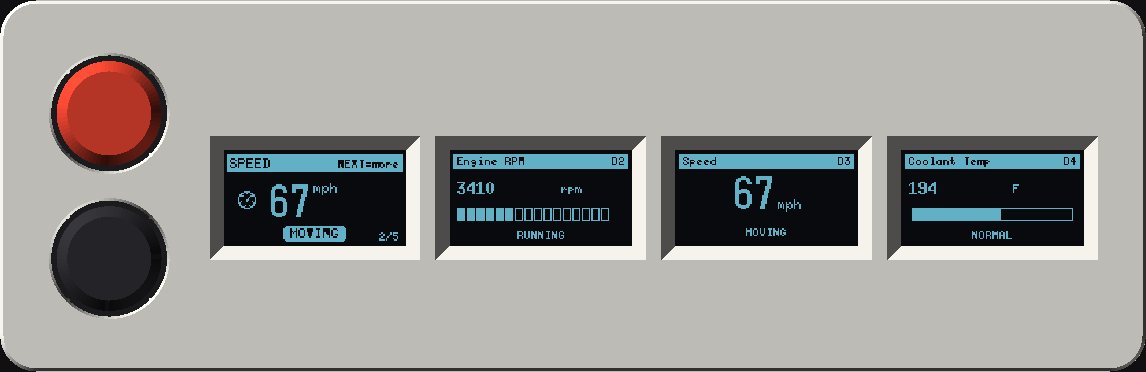
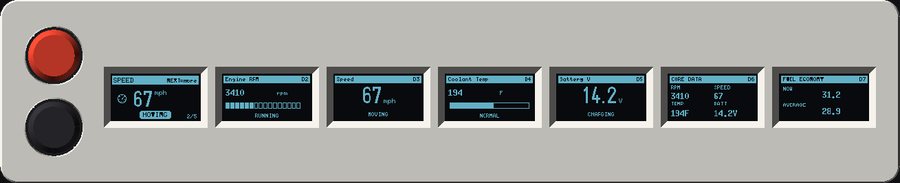
Each screen is yours to configure: digital RPM tach, speed, coolant, battery, fuel economy, fuel & range, a 2×2 core-data grid, trip peaks — or any of 18 live sensors, each viewable as a number, a gauge, or a scrolling graph.
Instant-MPG sparkline, average MPG that survives power cycles, distance-to-empty range, trip records and peaks — plus a 0–60 timer for honest bragging.
Overheat threshold, low-voltage warning and a shift light, with a buzzer and LED. Alarms you set once and forget until they save you.
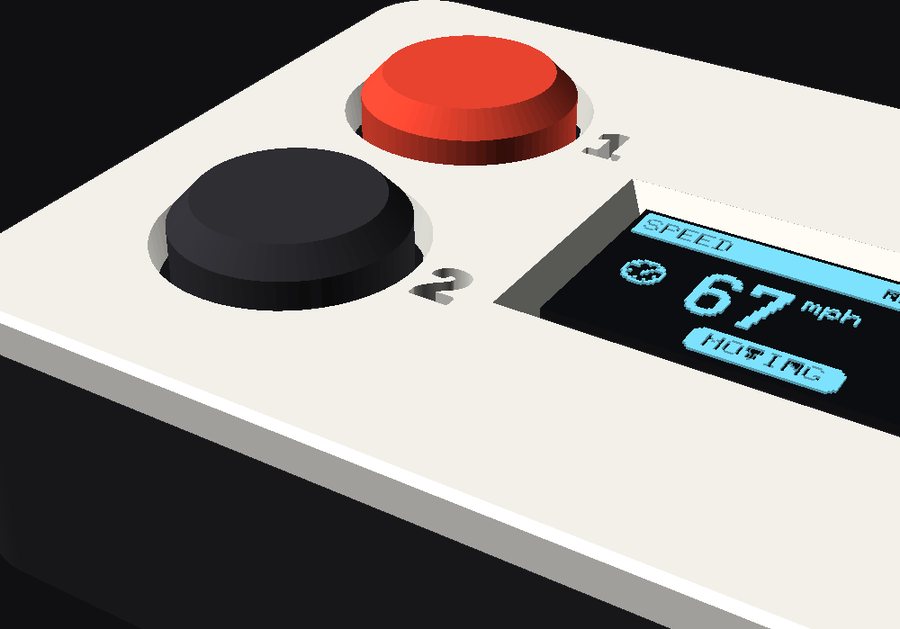
NEXT cycles, SELECT picks, hold to go back. Boots in about a second and reopens the exact screen you left it on.
mph or km/h, °F or °C, psi / kPa / bar, MPG / L-per-100 / km-L. Set once, saved to flash.
One firmware · eight sizes
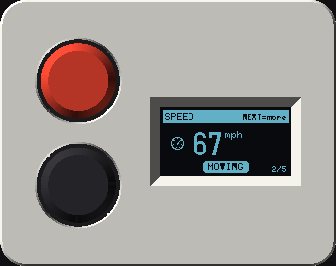
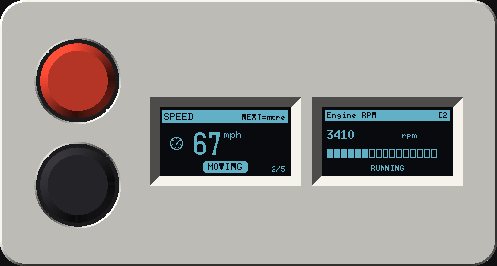
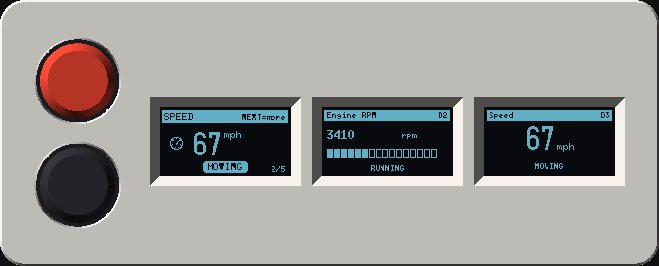
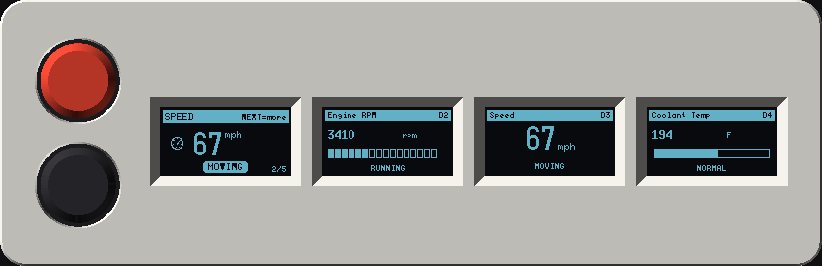
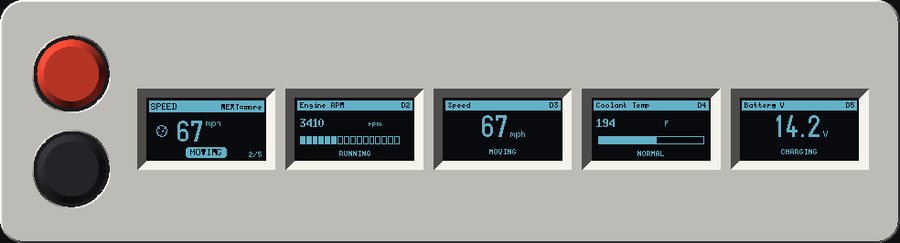
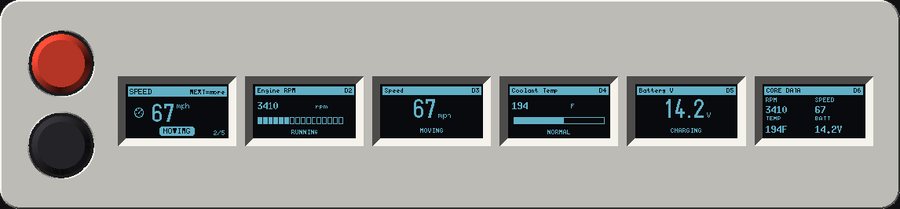
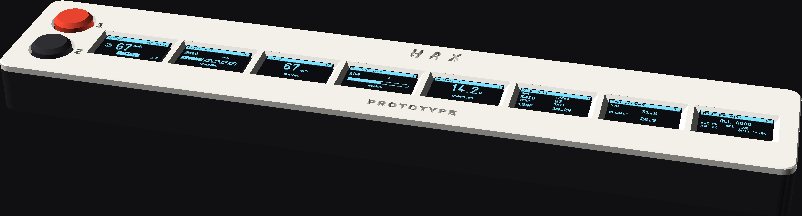
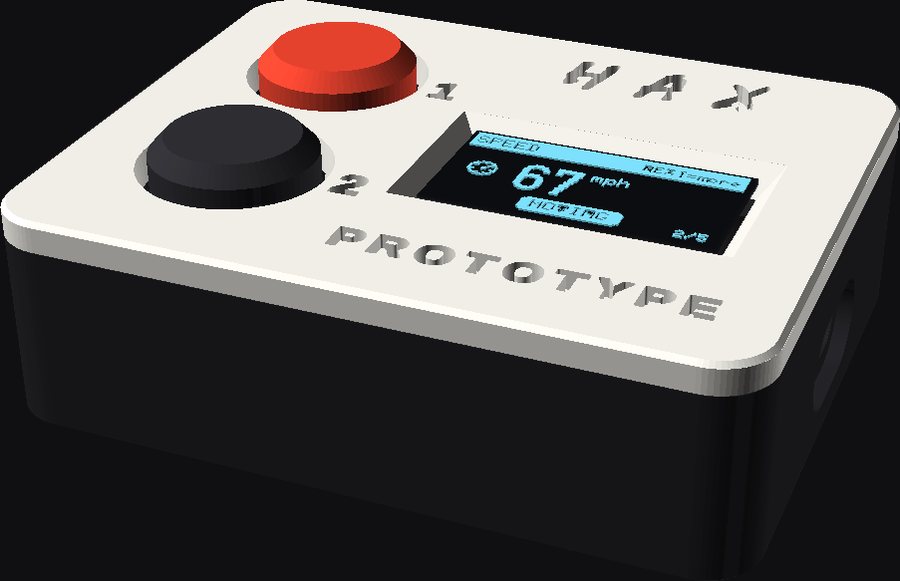
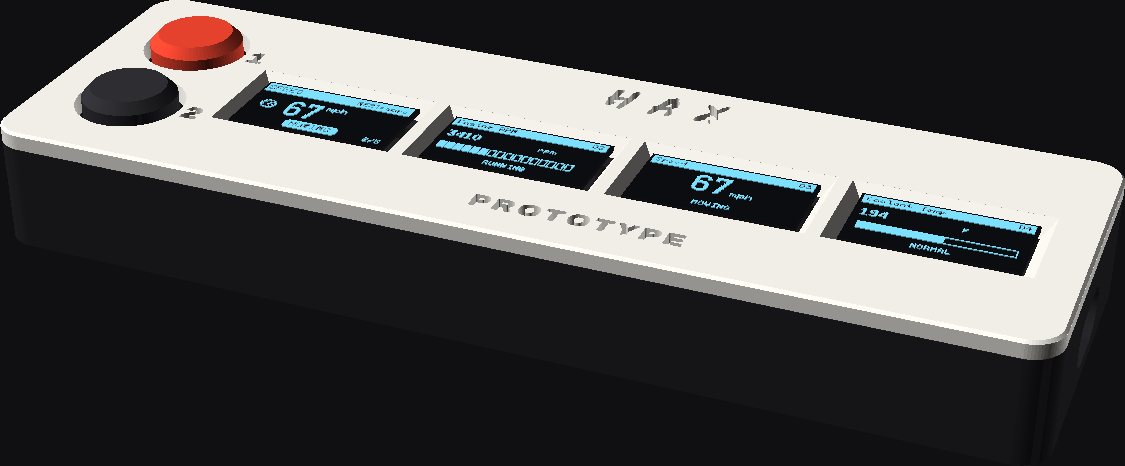
The same brain drives one screen or eight. Solo is a single smart gauge; Octa is a full glass cockpit for your dash. Shown at true relative scale:


Add-on
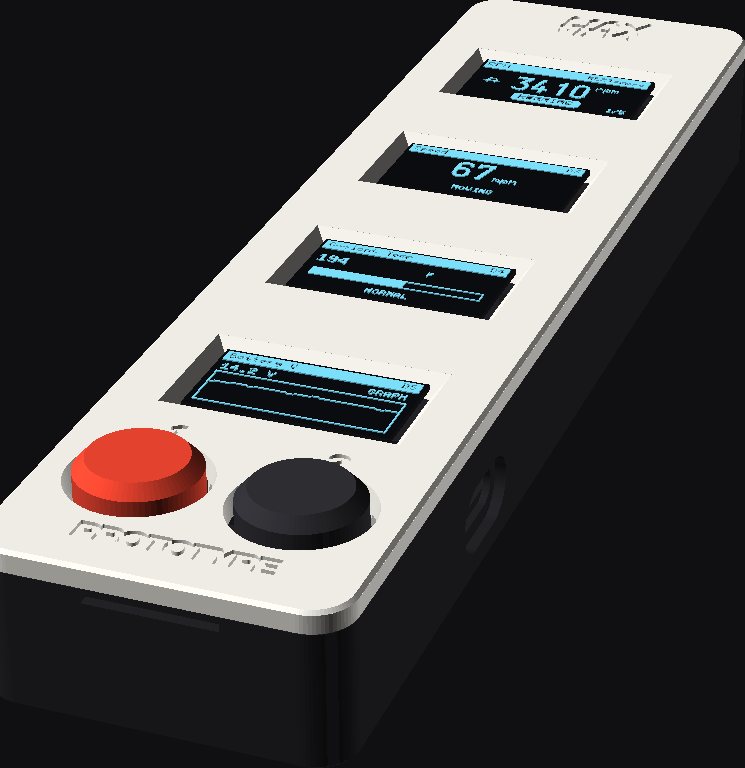
A vertical 4-screen tower that reads like a classic A-pillar gauge pod — RPM, boost, coolant, voltage in a stack. Same firmware, same snap-fit body.
Zero-config pairing
Cheap ELM327 adapters are a zoo of Bluetooth chips. DrivePulse auto-discovers the adapter's BLE serial link whichever flavor it speaks (FFE0/FFE1, FFF0, Nordic UART…), connects without a pairing PIN, and remembers your adapter by MAC address for every drive after. v1.61 hardened the link so a slow or flaky adapter can freeze neither the dash nor your data.
Any BLE ELM327 in the OBD-II port under your dash. Already own one? It almost certainly works.
USB-C from any 12 V socket adapter. It boots in about a second.
Adapter menu > Scan. Likely adapters sort to the top with signal bars. Pick yours — done forever.
Gauges live. Faults announced. Trip logged. It reconnects itself every time you start the car.
The hardware
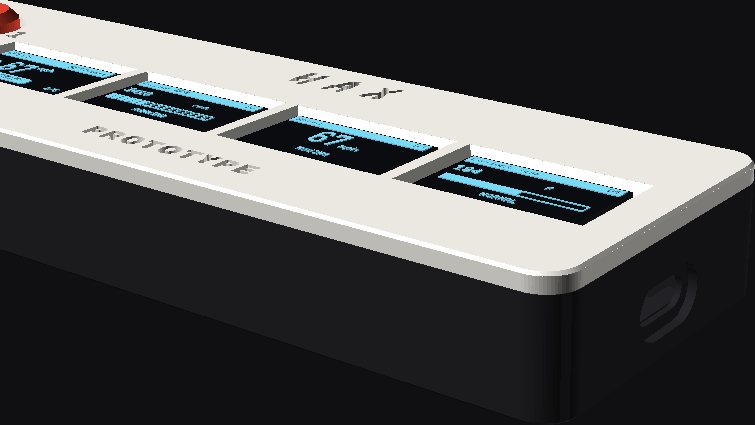
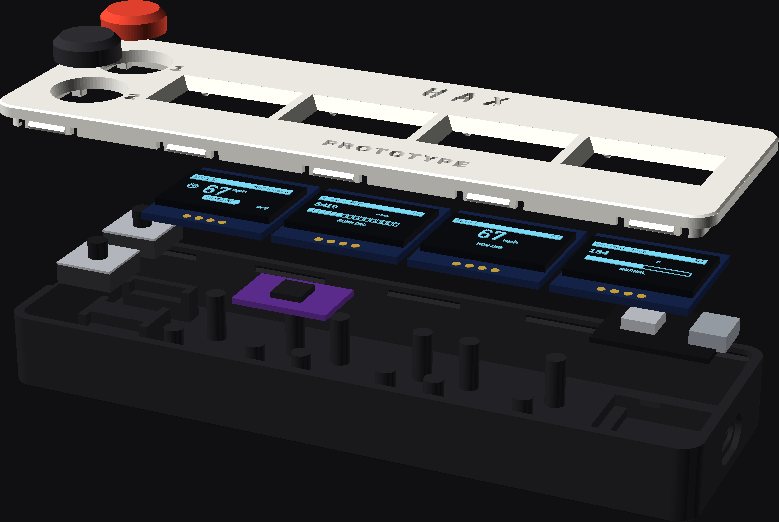
Two 3D-printed parts that snap together with zero fasteners. Boards click into printed trays, the lid clicks into wall grooves, the caps push on last. Openable with a fingernail, rebuildable forever.
Specification
| Brain | ESP32-C3 Super Mini — RISC-V @ 160 MHz, BLE 5 |
| Vehicle link | Any BLE ELM327 OBD-II adapter (auto-discovered, remembered by MAC). Standard J1979: live data, stored / pending / permanent codes, freeze frame, readiness, VIN, code clearing |
| Compatibility | OBD-II vehicles — US market 1996+, EU petrol 2001+ / diesel 2004+ |
| Displays | 1–8 × 0.96″ OLED 128×64, partial-refresh scheduled; TCA9548A I²C mux from 2 screens up |
| Gauge views | Numerical · Gauge/Bar · Live Graph, per screen; digital RPM tach |
| Live sensors | 18 PIDs: load, coolant, fuel trims, MAP, RPM, speed, ignition advance, IAT, MAF, throttle, O2, run time, fuel level, baro, battery, ambient, fuel rate |
| Trip computer | Instant + average MPG (flash-persistent), range, trip records, 0–60 timer |
| Alerts | Overheat, low voltage, shift light — buzzer + LED |
| Input / power | 2 tactile buttons · USB-C, powered from a 12 V socket adapter |
| Enclosure | Two printed parts, snap-fit, zero fasteners, 58–254 mm wide |
| Firmware | Tridectra Fault Sentinel v1.61 — on-device DTC database, no phone or cloud required, settings + economy survive power cycles; free updates over USB for the life of the product |
Rewards
Duo / Trio / Penta / Hexa / Septa sizes available as pledge options at launch. Prices are draft placeholders. DrivePulse needs a BLE ELM327 adapter — bring your own or add the vetted one.
Stretch goals
OBD-to-USB-C power tap with auto-sleep — no 12 V socket used, no battery drain when parked.
CNC top panel option, same snap fit, for every built tier.
Session logging and a lap/segment timer view for track days — still on-device, still no cloud.
Plan
Campaign live. Firmware v1.61 is running in real cars today — what you see is what ships.
Funded. Bulk component orders placed the same week; backer survey for colors and add-ons goes out.
Parts + print farm. Bulk electronics, adapter compatibility lab (we buy the weird clones so you don't).
Kits ship.
Built units ship. Every unit soak-tested against a live ECU simulator before boxing.
Risks & challenges
The adapter zoo. Cheap ELM327 clones vary wildly. That's exactly why the firmware auto-discovers the BLE link, bounds every request, and recovers from stalls — and why we offer a vetted adapter add-on tested against this exact code.
Vehicle variance. Not every car reports every PID. DrivePulse degrades gracefully — unsupported gauges say so instead of showing garbage, and battery voltage falls back to the adapter's own reading.
Print throughput. ~4 printer-hours per unit; our farm covers the goal quantity 3× over.
What it will never do. DrivePulse reads data and clears codes with standard OBD-II commands. It does not reprogram, tune, or write to your ECU — by design, there is nothing here that can brick a car.
FAQ
If it has an OBD-II port — every US-market car since 1996, EU petrol since 2001 and diesel since 2004 — yes for fault codes and the core gauges. Some older or exotic cars report fewer live sensors; the device simply hides what your ECU doesn't offer.
Any Bluetooth Low Energy ELM327 (the $8–15 kind). The firmware auto-detects the BLE serial flavor, so brand roulette doesn't matter. Classic-Bluetooth-only or WiFi-only adapters won't work — if unsure, grab the vetted add-on.
It uses read commands plus the same standard code-clear function every $30 scan tool has. It cannot write, flash or tune the ECU. Erasing codes resets emissions readiness monitors — the device warns you about exactly that before it lets you do it.
No phone, no app, no account, no cloud. The device talks straight to the adapter and keeps everything — settings, average MPG, trip records — in its own flash.
Treat it like a gauge pod: mount it low or on the pillar, outside airbag zones and sight lines, and set it up while parked. It's designed to be glanceable — big digits, high contrast — precisely so you don't stare at it.
Because your phone is your phone. DrivePulse is always there, always on, boots in a second, needs no unlocking, and survives being left in a hot car. Dedicated beats convenient.